
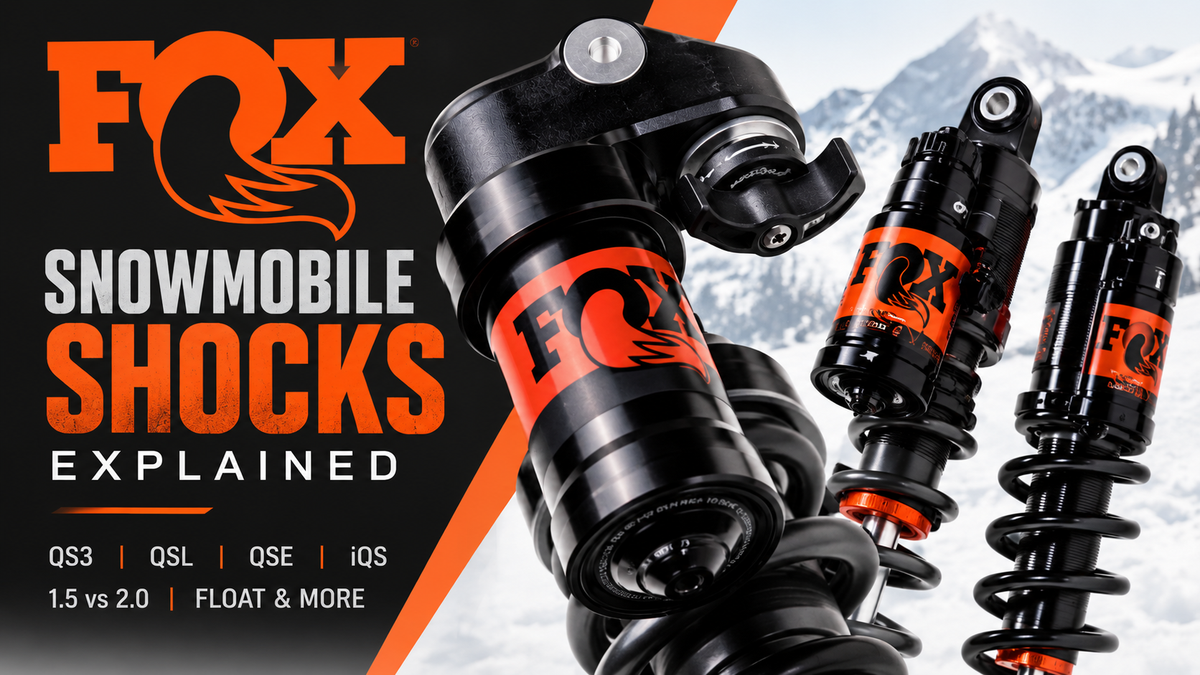
If you’ve been shopping for Fox snowmobile shocks, you’ve probably run across terms like QS3, QSL, QSE, iQS, 1.5, 2.0 and Float. But what do they actually mean, and which Fox shock is right for the way you ride?
Fox has been building shocks for snowmobiles since the late ’80s, and today they’re one of the most recognized names in snowmobile suspension.
There are basically two types of riders. First, there’s the guy who never touches his shock settings because he either doesn’t have any adjustments or doesn’t understand them. Second, there’s the guy who loves to tweak every adjustment on the shock.
I’m the first guy for the most part. I understand the adjustments and what they do, but I’m just too ADHD to take the time to make tiny adjustments. Don’t get me wrong, if the sled isn’t handling well, I’ll make some adjustments and get it close, but that’s about it.
Why We Like the Fox QS3
Fox introduced the QS3 roughly 10 years ago, and it’s pretty much the perfect shock for the first guy I mentioned.
The Fox QS3 has a simple three-position dial for Soft, Medium and Hard. It requires no tools, takes seconds to adjust and is pretty much self-explanatory.

If you want to make one improvement to your sled that can change your day on the trail or mountain, consider a set of Fox QS3 snowmobile shocks.
You can browse our complete selection of FOX snowmobile shocks to see the different setups available for your sled.
Fox Shock Terminology: QS3, QSL, QSE & iQS
Here’s where all those letters come in. Fox currently offers several different adjustment systems, including QS3, QSL, QSE and iQS.
QS3
This is the original setup described above, with three positions of compression damping. Some front shocks also have compression and rebound adjustments.
QSL
The “L” stands for Lockout. This is geared toward the off-trail/mountain rider who doesn’t want the suspension to collapse while climbing, helping keep the skis closer to the ground.

QSE
Available for Ski Doo, the kit comes with an electronic switch that mounts to the handlebars allowing you to lock the rear shock on the fly.
iQS
Similar to Polaris Dynamix and Ski-Doo Smart-Shox, this Fox shock package allows the rider to electronically adjust the suspension from the seat.
Fox 1.5 vs. 2.0 Shocks: What’s the Difference?
Another question we get is the difference between Fox 1.5 and 2.0 snowmobile shocks.
The main differences are the size of the shock body and, typically, the shaft diameter. Why does that matter?
Fox 1.5 shocks have a 1.5-inch body and normally a 1/2-inch shaft. They’re a great choice for average trail riding and normal off-trail or mountain riding.

Fox 2.0 shocks hold more oil, allowing them to be ridden harder, take bigger hits, stay cooler and experience less fade. Typically, they come with a 5/8-inch shaft.
If you ride hard or do a lot of jumping, you’ll probably want the 2.0s.
Fox Coil Spring vs. Float Air Shocks
I’m personally partial to springs. I can count on them to always be there and work. Air tends to change based on temperature and, from what I’ve experienced, requires more checking.
Guess I’m old school, but I like the spring.
The upside to Fox Float air shocks is that they offer a huge range of adjustment and are lighter than a coilover shock. For riders who like having more adjustability and reducing weight, the Float definitely has its advantages.
Which Fox Snowmobile Shock Is Right for You?
For a lot of riders, you don’t need to over complicate it. Think about how and where you ride, how much adjustability you actually want and how hard you push your sled.
Hopefully this helps explain the basics of Fox snowmobile shocks and makes all those different letters and numbers a little less confusing.
Ready to Upgrade Your Suspension?
Whether you’re looking for a simple QS3 upgrade, a Float setup or something built for more aggressive riding, check out our complete selection of FOX snowmobile shocks to find the right setup for your sled and riding style.
Still not sure which Fox shock is right for your sled or the way you ride? Give us a call at 586-215-6849. We’re happy to answer your questions, explain the differences and help you figure out the right setup without making it more complicated than it needs to be.